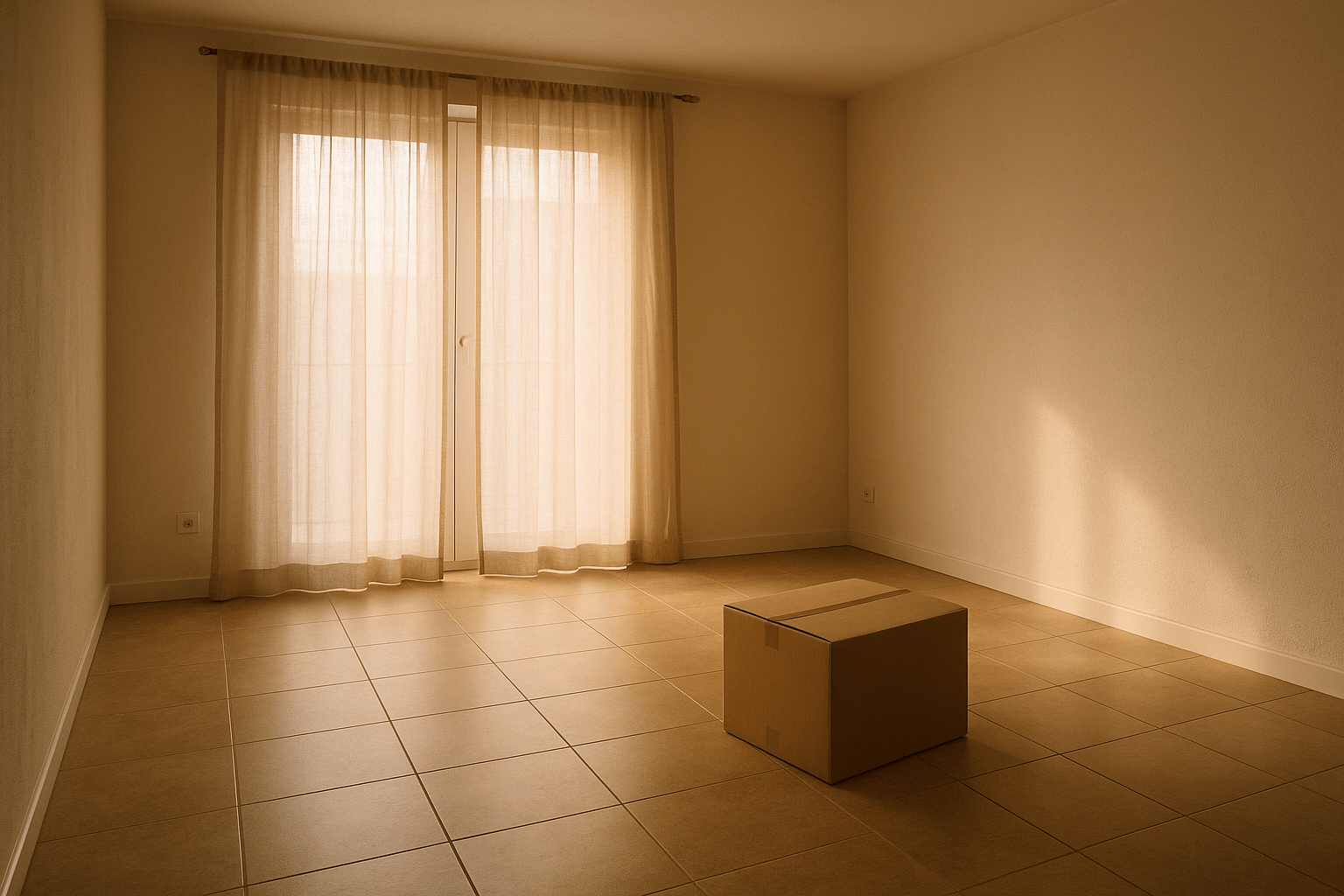
The first shared home is the most consequential space you will ever design together — not because it will be the most beautiful, but because it is where you establish a shared visual language. The decisions you make here, even provisional ones, create habits and preferences that carry forward.
This guide is not about aesthetics first. It is about sequence: what to decide before you buy anything, what to spend carefully on, and what can wait.
Before you move in
Walk through the empty space together before a single object enters it. Stand in each room and describe out loud — not what you want it to look like, but how you want to feel in it. This conversation is more useful than any mood board and takes about twenty minutes. Write down what you each say. You will need it.
Photograph every room empty, from every corner. The proportions of a space are hardest to remember once it is full, and you will make better decisions about furniture scale if you can return to these images later.
The first room
Choose one room and finish it — or get it as close to finished as your budget allows — before touching anything else. The instinct is to do everything at once; resist it. A single completed room gives you a reference point for everything else, and the confidence that comes from having one space that works is worth more than partial progress across all of them.
The room does not have to be the living room. It can be the kitchen, a bedroom, a study. It should be the room you will spend the most time in during the first weeks.
What can wait
Almost everything decorative can wait. Cushions, artwork, plants, shelving objects — these are decisions that improve when you have lived in the space for a while and know where the light falls, where you naturally sit, what the room needs from you rather than what you impose on it.
What cannot wait: floor treatments, window treatments, major lighting. These are the decisions that affect all others and are expensive to change. Make them slowly and with full information.
Building a visual language together
A shared visual language is not a compromise between two styles — it is something discovered in the overlap. The most reliable way to find it is to gather objects and images you each love separately, then look for what they have in common. The common ground is usually more specific than either person expected.
Disagreement about objects is almost always disagreement about material — about what something is made of, how it feels, how it will age. Once you identify the material question beneath the surface disagreement, it is much easier to resolve.