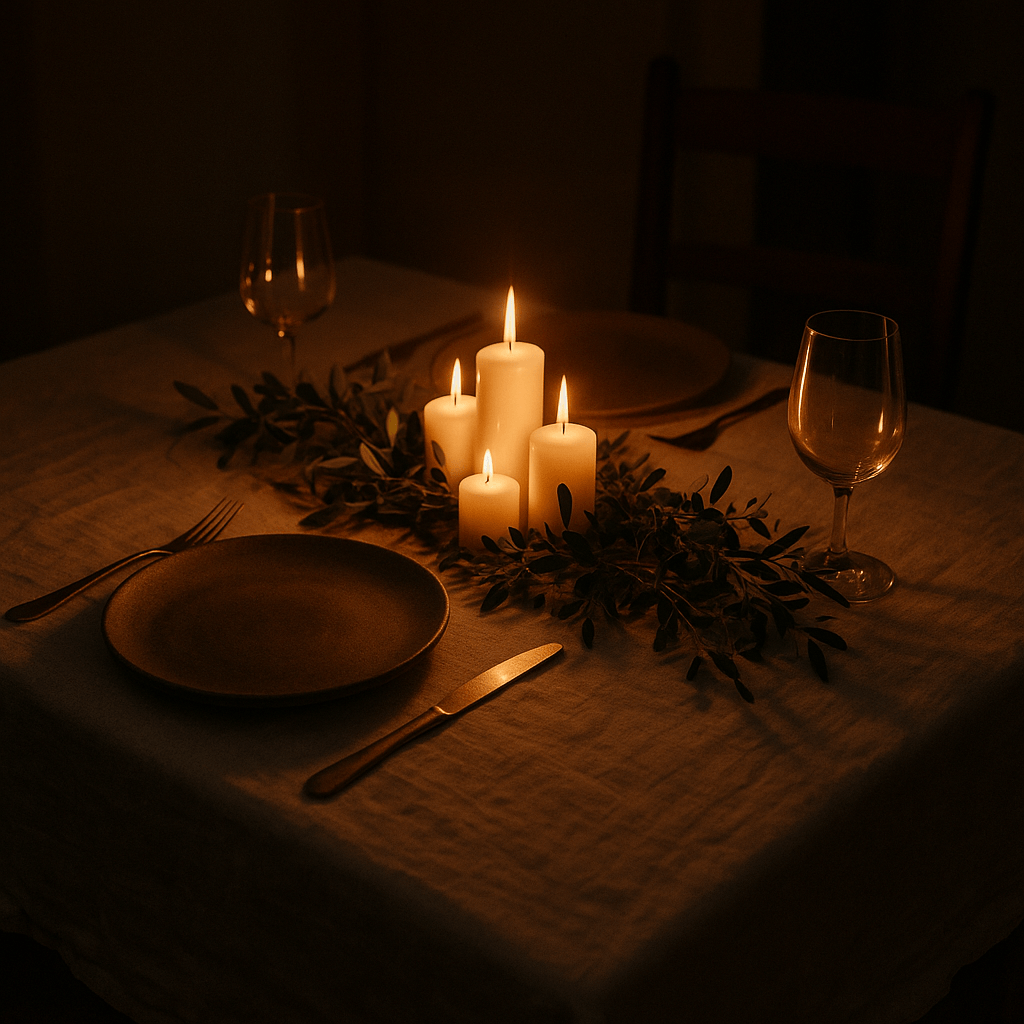
We planned celebrations for eight years before moving to writing about them, and the most consistent thing we observed across that time is this: people remember the table, not the room. The dining room — its proportions, its light fittings, its architectural detail — registers dimly if at all. The table itself, the specific quality of the cloth and the way the candles sat and the sound of the chairs pulling back — this is what stays.
This is useful information if you are planning a celebration of any kind. It means that a vast amount of the energy spent on venues and interiors is being directed at something that will not be experienced very deeply. The table, which is much more within your control, will be experienced intensely.
A table that makes people want to stay has a specific quality. It is not that it is beautiful in the abstract — it is that it is inviting at the moment of sitting down. The cloth is soft enough to touch. The proportion of the setting gives each person enough space to feel unconstricted. The candles are at a height that is below eye level when seated, so the light falls across the table rather than into the eyes. There is water already poured.
Each of these things is simple. None of them requires expensive equipment or professional floristry. The cloth can be undyed linen from a fabric shop. The candles can be supermarket pillar candles in white. The water can be poured from a jug. What matters is the intention behind the execution — the decision to think about each element before the first guest arrives.
Setting a table the morning of is different from setting it an hour before. It changes how the day feels. The table becomes a commitment rather than a task: something that has been decided and is waiting for the people who will sit at it. This temporal dimension of table-setting is undervalued. A table set in advance communicates that what is about to happen was worth preparing for. People sit down differently at a table that has been waiting for them.
The centrepiece question is often the most anxiety-inducing part of table planning, and it is also the least important. What the table needs from the centre is something for the eye to rest on in the intervals — between courses, in the pauses of conversation. It should be low enough to see over, calm enough to ignore, and made of materials that belong to the same register as everything else. A single ceramic vessel with two or three stems. A group of candles in varied sizes. Both are enough. Neither requires a florist.
The table is where celebrations actually happen. Everything else is architecture. Set the table well, and arrive at it before the guests do — sit at it alone for a moment and see what it asks. That moment of looking is the difference between a table and a good table.